
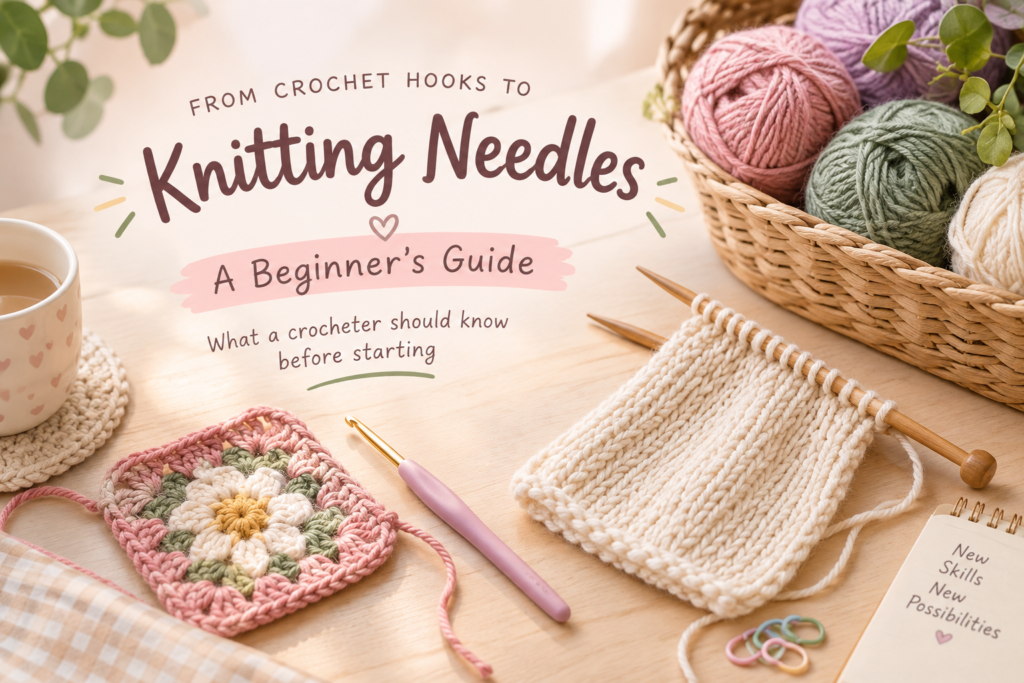
If you’ve been crocheting for a while, you probably know the comfort of having a hook in one hand and a ball of yarn in the other. There’s something satisfying about watching a simple strand of yarn slowly turn into something beautiful, whether it’s a cozy blanket, a cute flower or a handmade bag.
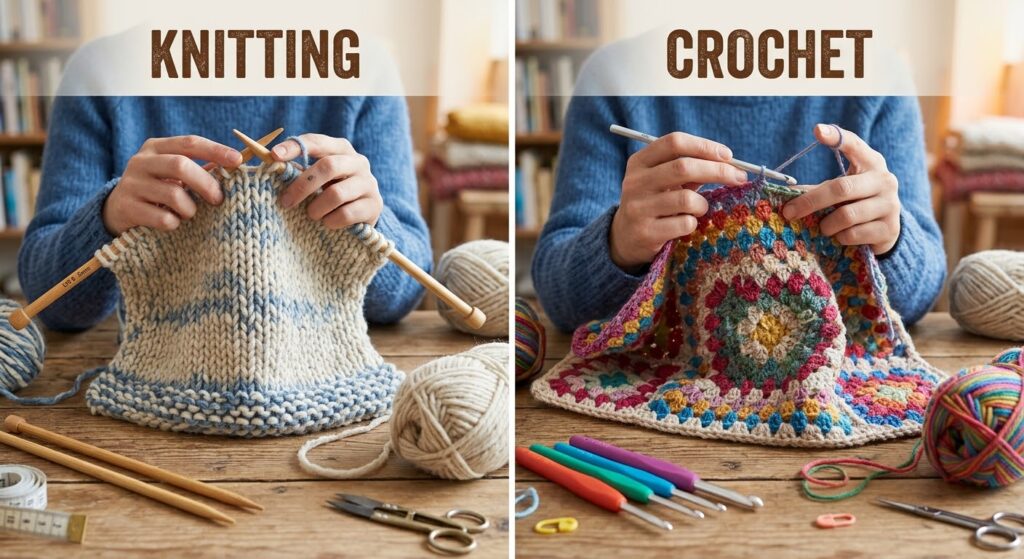
But have you ever wondered what it would be like to put down your crochet hook and pick up a pair of knitting needles?
As someone who enjoys crochet, I’ve always been curious about knitting. Although both crafts involve yarn and creating loops, knitting has its own techniques, rhythm and learning curve. And while I haven’t tried it myself yet, I’ve been exploring what crocheters like me should know before taking that first step.
So, if you’re a crocheter who’s thinking about learning to knit, let’s explore what to expect, what might feel familiar and what could take a little getting used to.
1. Your Crochet Experience Is a Good Starting Point
One of the nice things about learning knitting as a crocheter is that you’re not starting entirely from scratch.
If you’ve been crocheting, you’re already familiar with yarn tension, working loops, reading patterns and understanding how stitches come together to form fabric. These are useful foundations that can help you approach knitting with more confidence.
You may already know how to hold yarn comfortably, recognize different yarn weights and understand how changing hook sizes can affect your finished project.
However, knitting introduces a different way of working with those familiar materials. Instead of using a hook to complete individual stitches, you’ll be learning how to create and manage a series of live stitches on your needles.
Think of it as learning a new language using some familiar words. You may recognize the materials, but the way you use them will be different.
2. Understanding the Basic Knitting Tools
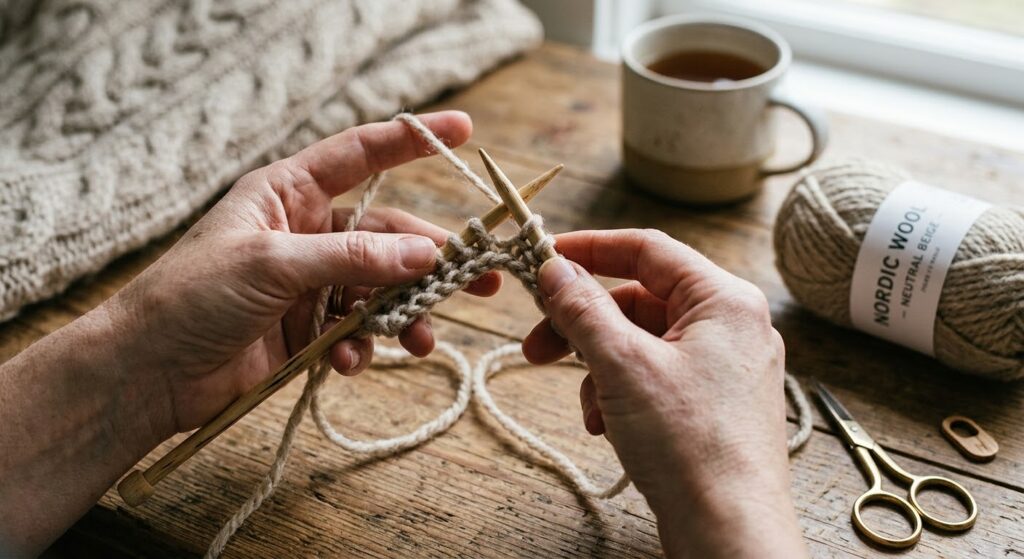
Unlike crochet, which typically requires only one hook, knitting usually involves two needles. There are also different types of knitting needles, each designed for particular techniques and projects.
Straight needles
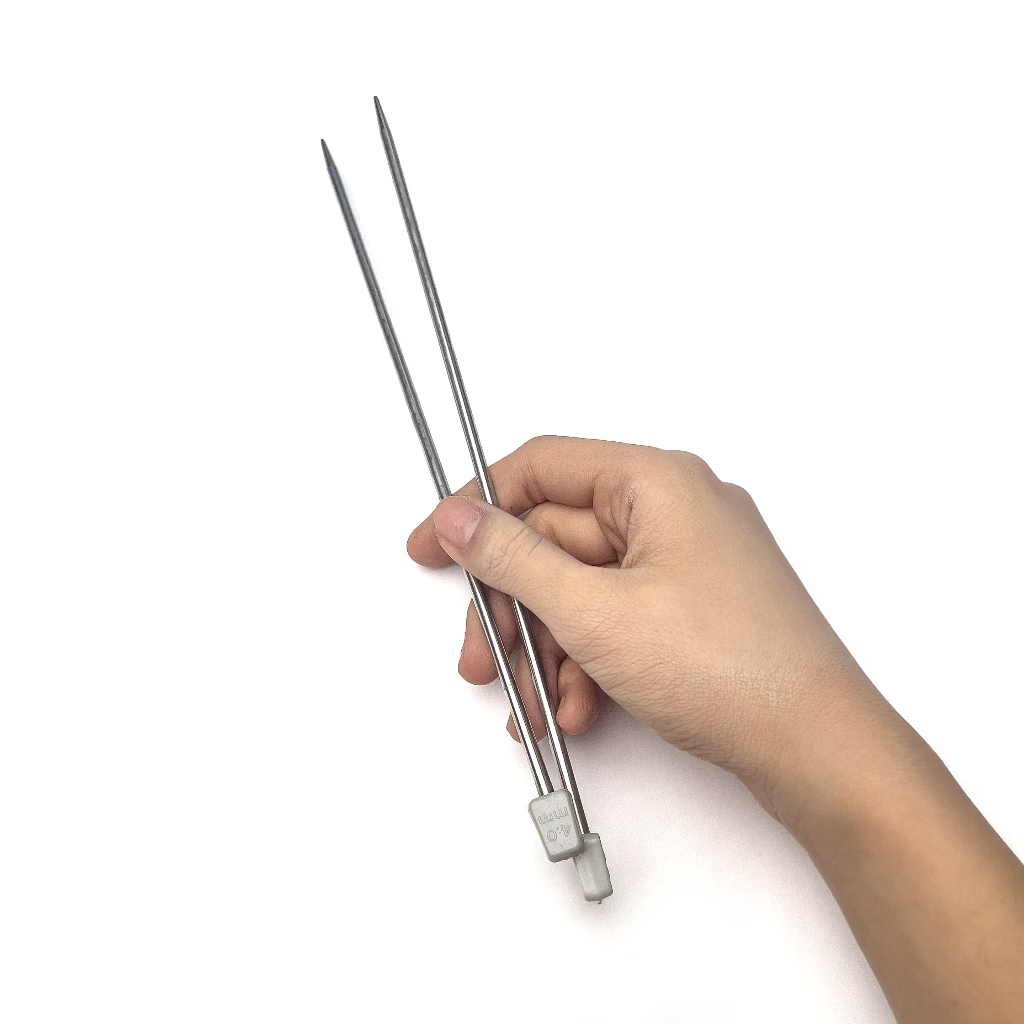
These are the traditional knitting needles that many beginners picture when they think of knitting. They have a pointed end and a stopper at the other end to keep stitches from slipping off.
Straight needles are often used for flat projects, such as scarves, dishcloths and small rectangular swatches.
Circular needles
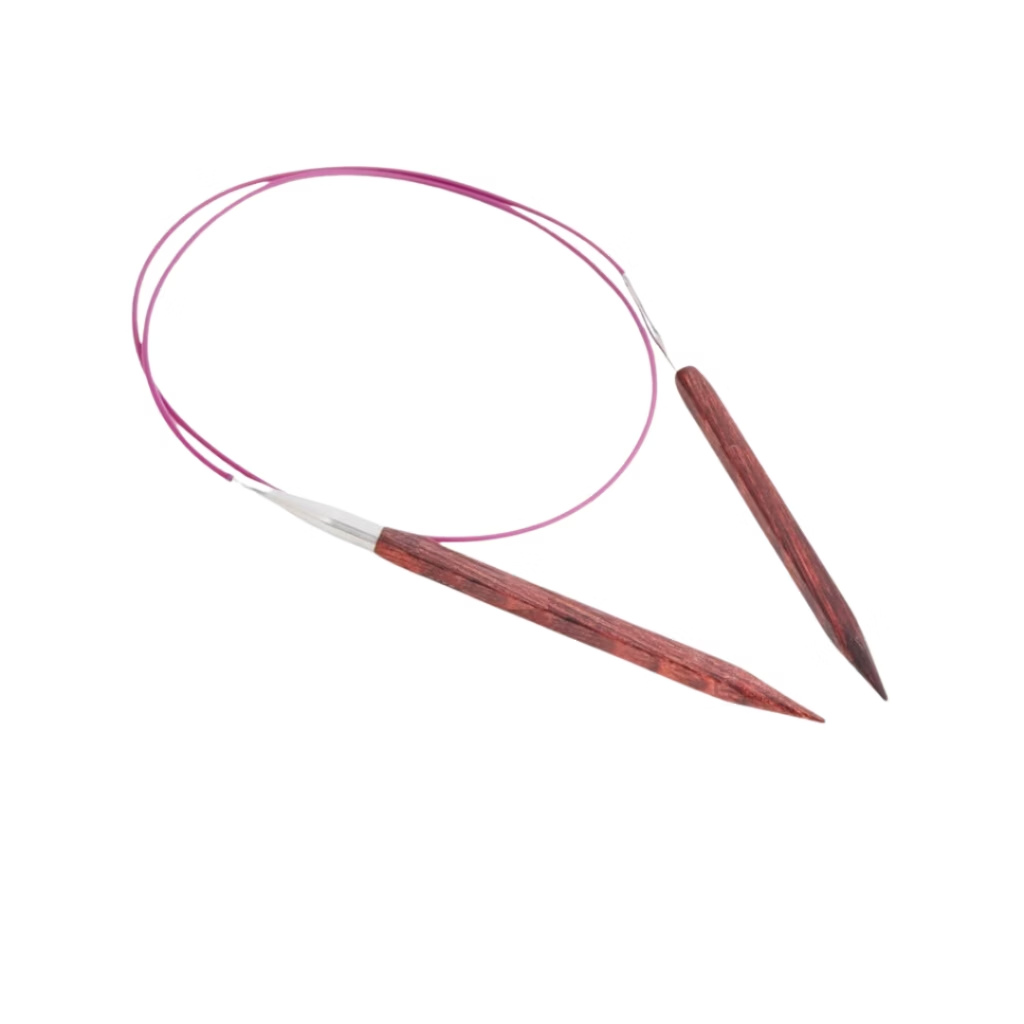
Circular needles consist of two short needle tips connected by a flexible cable. They can be used to knit flat pieces as well as seamless projects worked in the round, such as sweaters, hats and cowls.
Despite their name, circular needles aren’t limited to circular knitting. They’re also useful for holding a large number of stitches on wider projects.
Double-pointed needles
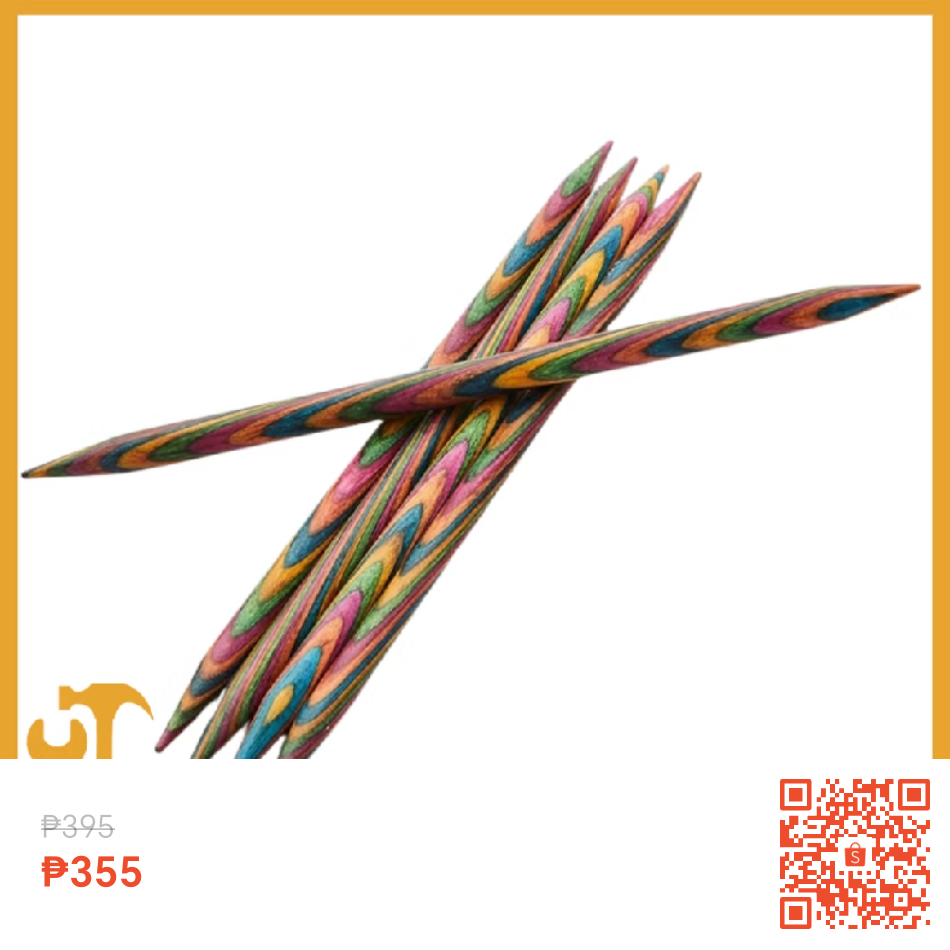
These needles have points at both ends and are commonly used for knitting smaller projects in the round, such as socks, sleeves and the tops of hats.
For someone who’s just starting, a pair of appropriately sized straight or circular needles can be enough to begin learning basic knitting techniques.
3. Getting Familiar with Knit and Purl Stitches
In crochet, we have familiar stitches such as single crochet, half double crochet and double crochet. Knitting also has fundamental stitches, but two of the most important are the knit stitch and the purl stitch.
The knit stitch
The knit stitch is one of the first techniques beginners usually learn. It creates a series of interlocking loops and forms the basis of many knitted fabrics.
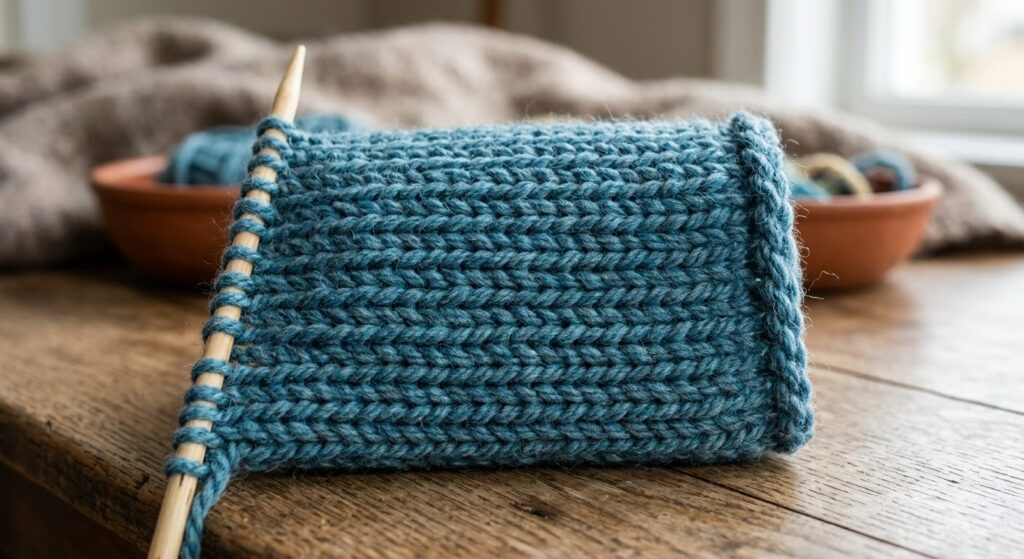
When you knit every row back and forth, you produce what’s called garter stitch. It’s a textured fabric that’s reversible and often recommended for beginners.
The purl stitch
The purl stitch is closely related to the knit stitch, but it’s worked differently, with the yarn positioned in front of the work as you form the stitch.
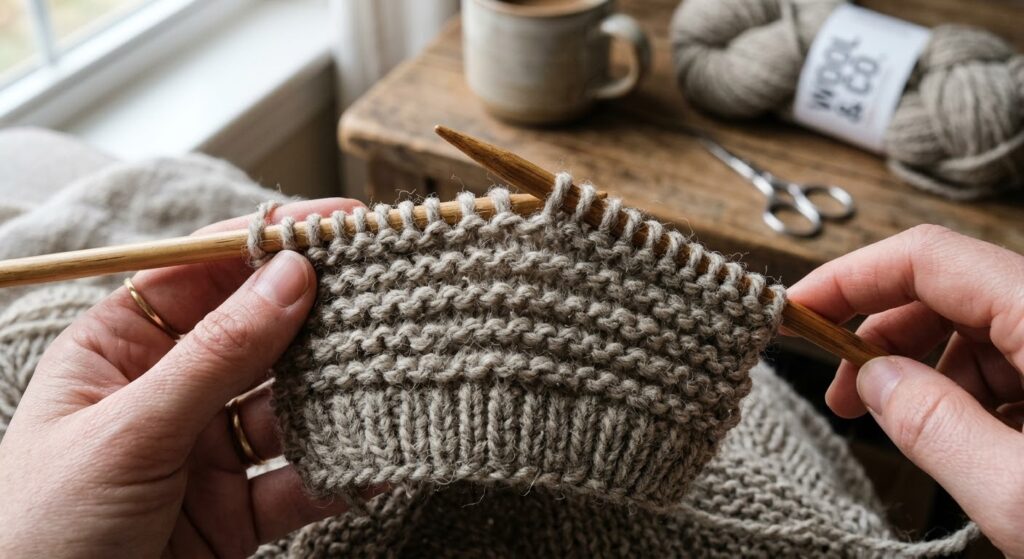
Learning to alternate knit and purl stitches allows you to create a wide range of textures, including ribbing and seed stitch.
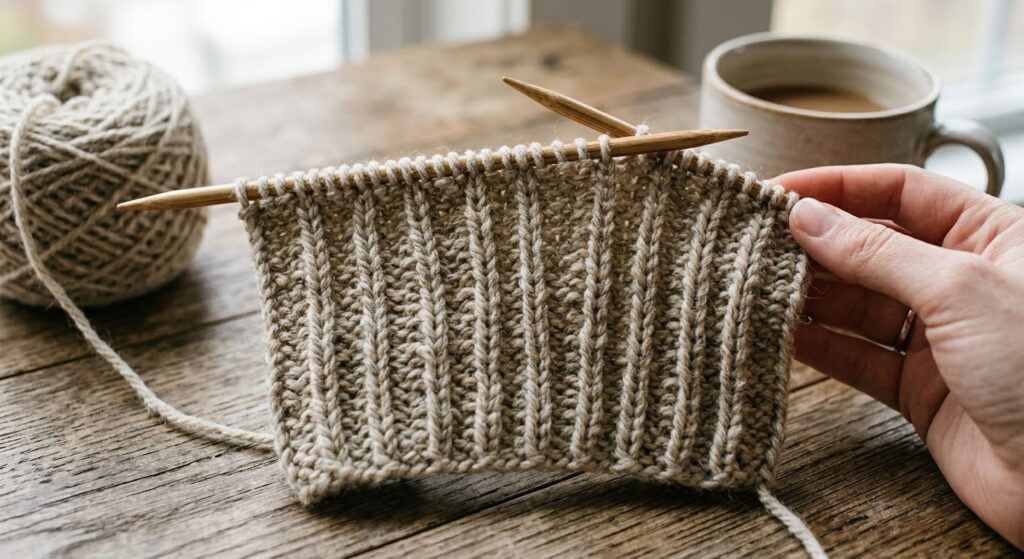
Once you understand these two basic stitches, you can begin exploring more complicated patterns and techniques.
For a crocheter, the challenge may not be understanding what a stitch does, but getting comfortable with the new hand movements needed to create it.
4. Learning to Manage Live Stitches
One of the biggest differences a crocheter may notice when learning knitting is how stitches are held.
In crochet, you generally work with one active loop on your hook. Once you complete a stitch, you move on to the next one.
In knitting, multiple unfinished stitches remain on the needle as you work across a row. These are known as live stitches, and they need to stay secure until you work them into the next row.
This might feel a little intimidating at first, especially if you’re used to having only one active loop to worry about.
A dropped stitch in knitting can unravel down through previous rows if it’s not caught. Fortunately, knitters can learn techniques to pick up dropped stitches and restore the fabric without having to undo an entire project.
With practice, managing live stitches becomes a natural part of knitting.
5. Yarn Tension Still Matters
If there’s one thing crocheters already know, it’s how important yarn tension is.
Tension determines how tightly or loosely your stitches are formed, which affects the size, appearance and flexibility of your finished project.
Knitting is no different. Uneven tension can make some stitches larger or smaller than others, resulting in fabric that looks inconsistent.
However, you may find that maintaining tension feels different when working with two needles rather than one hook.
It can take time to find a comfortable way to hold your yarn, control the needles and form consistent stitches. There are several ways to hold yarn while knitting, so it’s worth exploring different methods to see which feels most natural.
Don’t worry if your first swatch looks uneven. It’s simply part of getting familiar with a new technique.
6. Understanding Knitting Patterns and Abbreviations
If you’ve already worked with written crochet patterns, you’re probably familiar with abbreviations such as sc, hdc, dc, ch and sl st.
Knitting patterns also use abbreviations, although the terminology is different.
Some common knitting abbreviations include:
- K: Knit
- P: Purl
- CO: Cast on
- BO: Bind off
- YO: Yarn over
- K2tog: Knit two stitches together
- St(s): Stitch or stitches
- RS: Right side
- WS: Wrong side
The cast-on technique is used to create the initial row of stitches on the needle, while binding off secures the stitches at the end of a project.
As with crochet, knitting patterns may also include special instructions, stitch repeats and charts. Learning to recognize these abbreviations can make patterns easier to follow.
And just like crochet, it’s always a good idea to read through a pattern before starting so you know what to expect.
7. Start with a Simple Knitting Project
When learning a new craft, it’s tempting to jump straight into something beautiful and complicated. But starting with a simple project can help you focus on learning the basic techniques without feeling overwhelmed.
Here are a few beginner-friendly knitting projects to consider:
A garter stitch scarf
A scarf worked entirely in knit stitches is a classic beginner project. It allows you to practice casting on, knitting each row and binding off.
A simple dishcloth
A small dishcloth is a practical project that doesn’t require a large amount of yarn. It’s also a great way to practice consistent tension and understand how your stitches look as the fabric grows.
A knitted headband
Once you’re comfortable with the basics, a simple headband can be a fun project to explore shaping, joining or working with ribbing.
A basic swatch collection
You can make small squares of garter stitch, stockinette stitch and ribbing to see how different techniques affect the texture and stretch of knitted fabric.
Starting small gives you the opportunity to practice, make mistakes and improve without committing to a large project.
8. Expect a Different Learning Curve
Even if you’re already comfortable with crochet, learning knitting may feel like being a beginner all over again.
Your hands will need to adjust to different movements, your fingers will learn to coordinate the needles, and you’ll need to develop a new rhythm.
There may be moments when you feel awkward, especially when you’re trying to keep your stitches from slipping off your needles or figuring out how to correct an error.
But that’s part of learning something new.
Your crochet experience can give you an advantage in understanding yarn and fabric, but it doesn’t mean you have to master knitting immediately.
Give yourself room to experiment, practice and enjoy the process. You don’t need to make something perfect on your first attempt. Sometimes, the most valuable part of a new craft is discovering how much you can learn along the way.
9. Why Learning Knitting Could Be Worth It for Crocheters
Learning knitting doesn’t mean you have to leave crochet behind. Instead, it can open up more creative possibilities.
You may discover new ways to construct garments, create different textures or achieve a particular drape that you’ve been wanting for a project.
You can also learn to combine the two crafts. Crocheted flowers can embellish knitted garments, crochet borders can finish knitted blankets, and crochet techniques can be used to join knitted pieces.
Having knowledge of both crafts may give you more options when deciding how to bring an idea to life.
And perhaps the best part is that you can appreciate both crafts for what they offer without having to choose a favorite.
A New Craft, A New Perspective
As a crocheter, I’m already familiar with the joy of turning yarn into something handmade. But exploring knitting has made me curious about the different techniques, possibilities and experiences that come with learning another yarn craft.
I may not have picked up my knitting needles just yet, but I’m looking forward to the day I make my first stitches, work through my first mistakes and eventually complete a project of my own.
After all, there’s always something new to learn, even when we think we’ve found our favorite craft.
And who knows? Maybe one day, I’ll be sharing my first knitting project right here, along with everything I learned along the way.
For now, I’ll keep enjoying the familiar comfort of my crochet hook while leaving a little room for a new creative adventure.
Have you tried both crochet and knitting? Which one did you learn first, and what was your experience like when you tried the other? I’d love to hear your thoughts! 🥰
Explore more handmade creations, tutorials and stories on my blog, and visit my online shop for more of my crocheted pieces.