
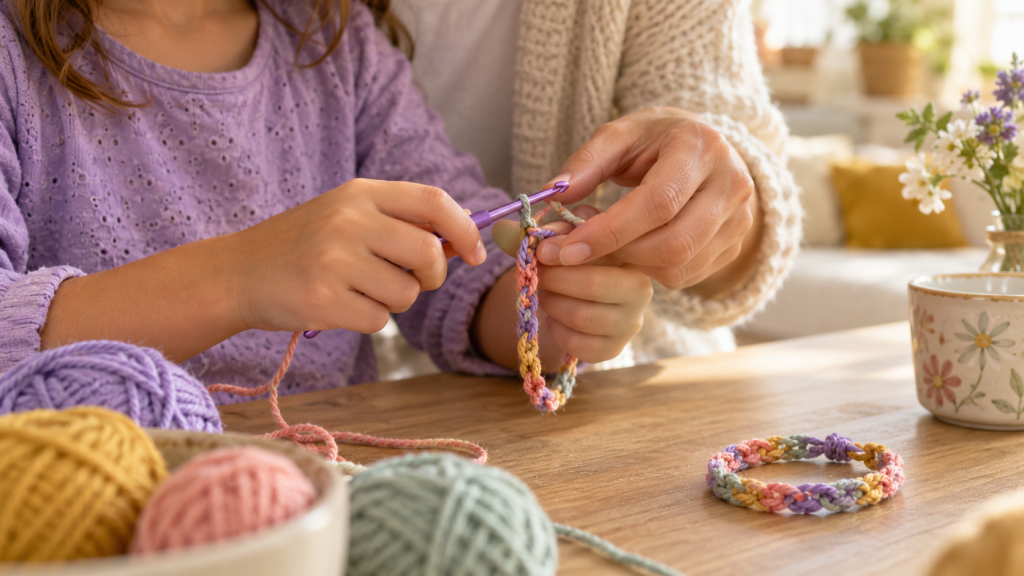
Teaching a child to crochet can be a wonderful experience, but choosing the right first project makes a big difference. If the pattern is too complicated or takes several days to finish, a young beginner may quickly lose interest.
That is why a simple chain bracelet is often the best beginner crochet project for kids. It teaches the most basic crochet movement while giving children something colorful and wearable to enjoy at the end.
A crochet chain bracelet does not require complicated stitches, counting long rows, or correcting difficult mistakes. With a little yarn, a crochet hook, and patient guidance, a child can create a finished project during one short crafting session.
Why Start With a Crochet Chain Bracelet?
The chain stitch is usually the first thing a new crocheter learns. It forms the foundation of many crochet patterns, so practicing it helps children become comfortable holding the hook, controlling the yarn, and forming loops.
A bracelet turns that practice into a real project. Instead of making a long chain without knowing what to do with it, children can wrap the finished chain around their wrist, tie the ends together, and wear their creation.
This simple sense of purpose is one reason a chain bracelet is the best beginner crochet project for kids. They are not simply practicing a stitch. They are making something they can keep, share, or give as a gift.
1. It Can Be Completed Quickly
Children often enjoy projects that give them a visible result without requiring hours of work. A basic chain bracelet can usually be completed in 15 to 30 minutes, depending on the child’s age and coordination.
Finishing quickly gives young beginners a satisfying feeling of accomplishment. That first finished project can encourage them to try something slightly more challenging next time.
The best beginner crochet project for kids should feel achievable. A small bracelet provides enough practice to develop a new skill without becoming repetitive or overwhelming.
2. It Only Uses One Crochet Stitch
A chain bracelet is made primarily with the chain stitch. The child does not need to learn single crochet, double crochet, turning chains, or complicated pattern abbreviations yet.
To make a chain stitch, wrap the yarn over the hook and gently pull it through the loop already on the hook. Repeat the same movement until the chain is long enough to fit comfortably around the wrist.
Because it focuses on one repeated action, this project allows children to develop rhythm and hand coordination. This simplicity makes it an excellent choice when searching for the best beginner crochet project for kids.
3. Children Can Choose Their Favorite Colors
One of the most exciting parts of crafting is choosing the materials. Let the child select a favorite yarn color or combine two or three colors that look good together.
Bright colors, soft pastels, rainbow yarn, and leftover yarn scraps can all work well. A child might choose colors inspired by a favorite cartoon character, school team, pet, or friend.
Providing creative choices gives children a sense of ownership over the project. The bracelet becomes something personal rather than an exercise they were told to complete.
4. It Helps Develop Useful Skills
Crochet can support fine motor skills, hand-eye coordination, concentration, and patience. Children practice controlling small hand movements while watching how the yarn and hook work together.
They also learn that mistakes are a normal part of making something by hand. A loop may become too tight, a chain may look uneven, or the yarn might slip off the hook. These small challenges give children opportunities to pause, try again, and solve a problem calmly.
The best beginner crochet project for kids should introduce these lessons gently. A bracelet is forgiving because a slightly uneven chain can still become a charming and wearable creation.
5. Mistakes Are Easy to Fix
Mistakes can frustrate a beginner, especially when undoing them means losing a large portion of a project. With a short crochet chain, fixing an error is usually simple.
If the last few chains are too tight or loose, gently pull the working yarn to undo them. Place the loop back on the hook and continue crocheting.
Avoid correcting every uneven stitch for the child. Their first bracelet does not need to look perfect. Uneven chains are part of learning, and seeing improvement across the bracelet can make the finished piece even more meaningful.
6. The Bracelet Can Become a Thoughtful Gift
Children love giving away things they have made. Once they understand the basic process, they can create bracelets for friends, siblings, parents, or teachers.
They can also add safe decorative elements, such as large beads or a handmade yarn tassel. Any beads should have holes large enough for the yarn, and small pieces should not be used around very young children.
Turning a simple lesson into a handmade gift is another reason this may be the best beginner crochet project for kids. It teaches that crafting can be a way to show care and make someone smile.

7. It Can Lead to More Crochet Projects
A chain bracelet may be small, but it creates a foundation for future crochet skills. Once a child can make consistent chains, they can learn how to crochet into those chains.
Their next projects might include:
- A friendship necklace
- A bookmark
- A simple headband
- A small coaster
- A doll scarf
- A basic granny square
Starting with the best beginner crochet project for kids can make these future projects feel less intimidating. The child already knows how to hold the hook, manage the yarn, and create the foundation chain.
Materials You Will Need
You only need a few basic materials:
- Medium-weight yarn in the child’s chosen color
- A 5 mm or 5.5 mm crochet hook
- Child-safe scissors
- A yarn needle for hiding the ends
- Large beads or charms, if appropriate and properly supervised
A medium-weight acrylic yarn is often easier for beginners because it is affordable, widely available, and easier to see than very thin yarn. Avoid fuzzy or novelty yarn at first because it can make the individual stitches difficult to identify.
How to Make a Simple Crochet Chain Bracelet
Begin by making a slip knot and placing it on the crochet hook. Keep the knot secure but loose enough to slide along the hook.
Wrap the yarn over the hook and pull it through the existing loop. You have now made one chain stitch. Continue creating chain stitches until the chain can wrap comfortably around the child’s wrist.
Remember to leave a little extra space so the bracelet is not too tight. Cut the yarn, leaving a tail several inches long. Pull the tail through the final loop and tighten it gently.
Tie the two ends of the chain together with a secure knot. An adult can then use a yarn needle to hide the loose ends.
When teaching the best beginner crochet project for kids, demonstrate each movement slowly. Let the child hold the hook and attempt the stitch independently instead of completing difficult sections for them.
Helpful Tips for Teaching Children to Crochet
Choose a quiet time when neither you nor the child feels rushed. Sit beside the child rather than directly opposite them so they can copy your hand movements more easily.
Use light-colored yarn because it makes the loops easier to see. Encourage relaxed hands, since pulling the yarn too tightly can make it difficult to insert or move the hook.
Offer help when needed, but allow the child’s bracelet to show their own work. Praise their patience, creativity, and willingness to try instead of focusing only on neat stitches.
Adult supervision is important, particularly when children use scissors, yarn needles, beads, or other small materials. Crochet projects should also be stored safely away from babies and pets.
A Small Project With a Big Reward
The best beginner crochet project for kids does not have to be impressive or complicated. It simply needs to make learning enjoyable.
A crochet chain bracelet gives children a manageable introduction to yarn and hooks while allowing them to make something useful. It can be completed quickly, personalized with favorite colors, and proudly worn or given to someone special.
Most importantly, it gives a young beginner the confidence to say, “I made this.” That feeling may be the beginning of a creative hobby they will enjoy for many years.