
When I first started this craft, I thought learning the basic crochet stitches was all I needed.
Single crochet? Check.
Double crochet? Check.
Chain? Easy enough.
But as I started exploring different crochet patterns, I realized there was a whole world of crochet stitches for beginners that I had never even considered.
And honestly, I wish I had discovered some of them much sooner.
There are stitches that create beautiful texture, stitches that make simple projects look more interesting, and stitches that can completely change the personality of a crochet piece without making the pattern ridiculously complicated.
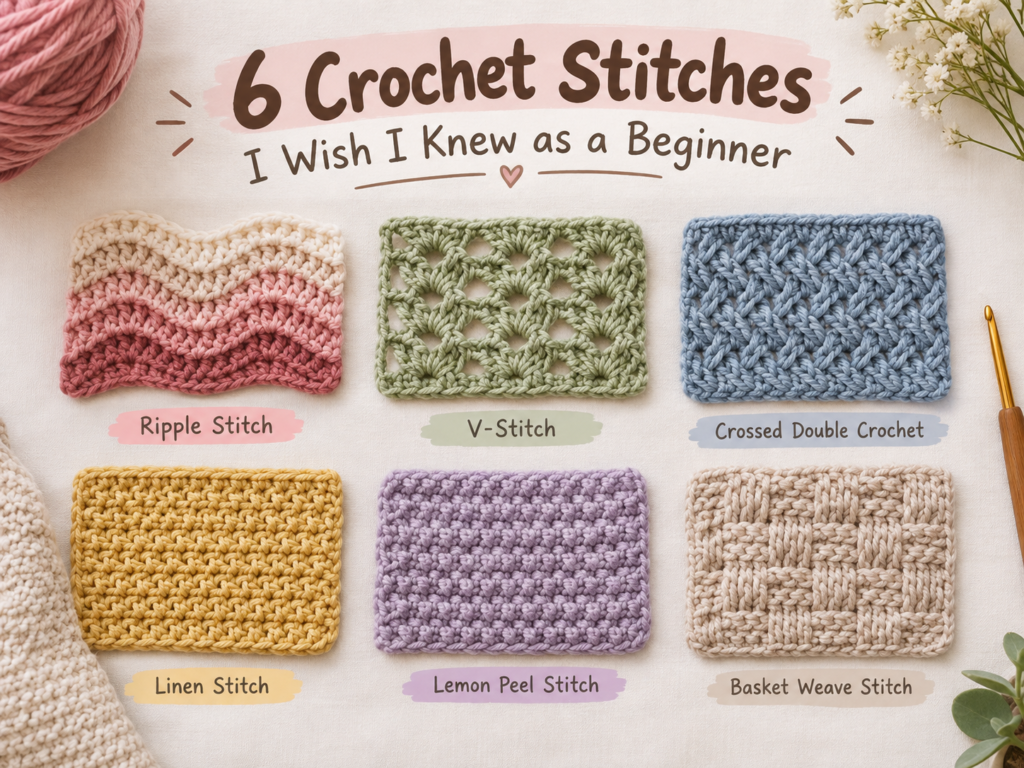
So today, I’m sharing 6 crochet stitches I wish I knew as a beginner: the ripple stitch, V-stitch, crossed double crochet, linen stitch, lemon peel stitch, and basket weave stitch.
I’ll also be showing you a swatch of each one so you can see how different they look when worked up.
Let’s get stitching!
1. Ripple Stitch
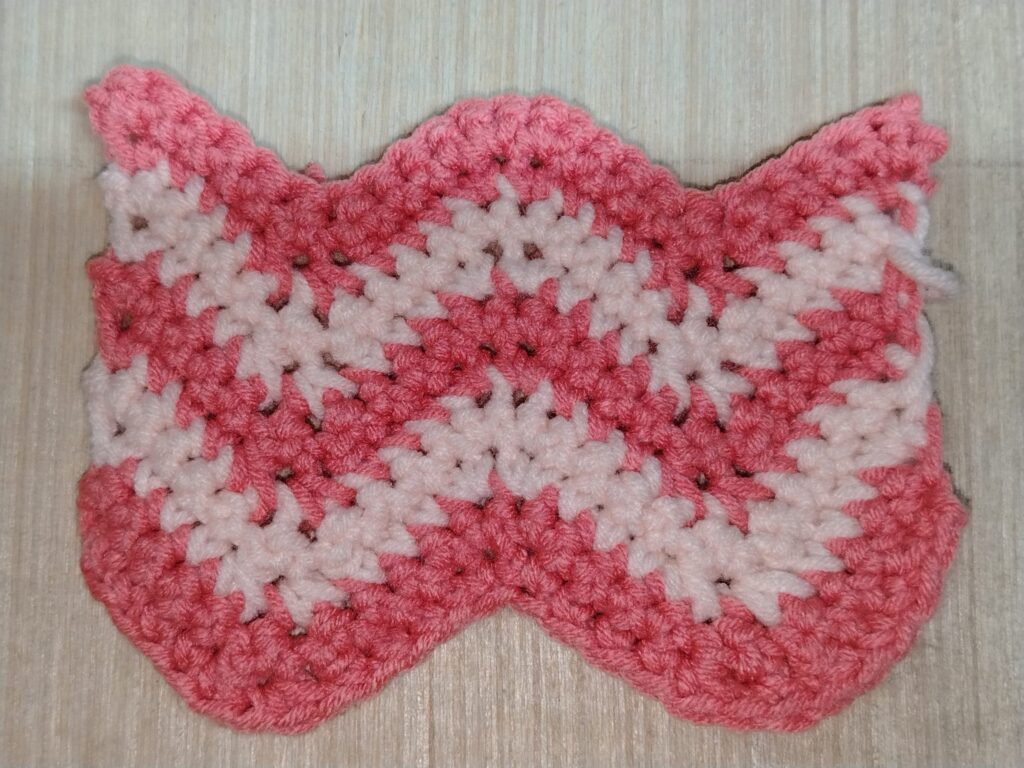
The ripple stitch is one of those crochet stitches that immediately makes a project more interesting.
It creates a beautiful wave-like pattern by combining increases and decreases. Depending on the colors you use, the waves can become even more noticeable, making this stitch especially fun for blankets and colorful crochet projects.
I wish I had learned this stitch earlier because it showed me that crochet doesn’t have to be made up of straight rows.
You can actually create movement and shape simply by changing where you increase and decrease.
Why I love it
The ripple stitch is great for:
- Blankets
- Baby blankets
- Throws
- Scarves
- Colorful crochet projects
- Striped designs
And let’s be honest, there’s something very satisfying about watching those little waves appear as you crochet.
Swatch: Here is my ripple stitch swatch so you can see the texture and wave pattern up close.
2. V-Stitch
The V-stitch is another one I wish I had discovered sooner.
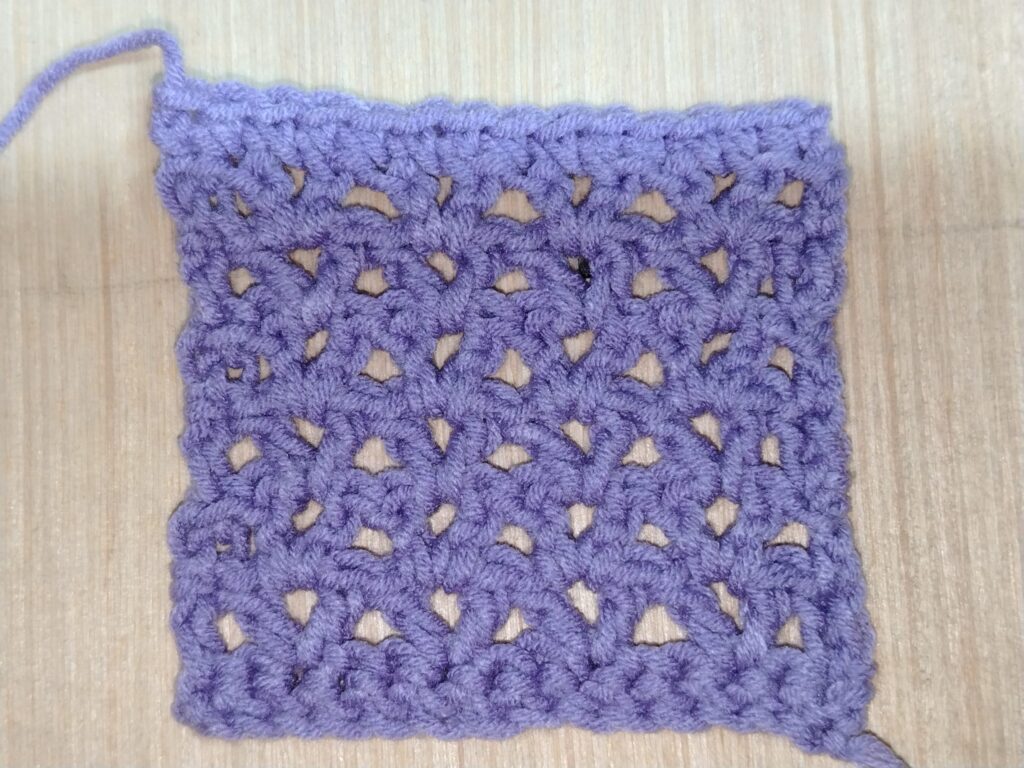
It’s made by working stitches into the same space, creating little V shapes throughout the fabric. The spaces between the stitches also give the finished piece a more open and airy look.
What I love about the V-stitch is how simple the concept is while still looking quite decorative.
Once you learn it, you can use it to create everything from blankets to scarves and shawls.
Why I love it
The V-stitch works beautifully for:
- Shawls
- Scarves
- Blankets
- Cardigans
- Lightweight crochet projects
- Decorative borders
- Poncho
It is also a great stitch to experiment with when you’re ready to move beyond solid-looking crochet fabrics.
Swatch: My V-stitch swatch shows how the little V shapes create an open and lacy texture.
3. Crossed Double Crochet
The crossed double crochet is one of those stitches that looks much more complicated than it actually is.
The idea is to cross your double crochet stitches over one another, creating a beautiful woven or crisscross effect.
This was one of those stitches that made me realize how much you can do with a basic double crochet.
You don’t necessarily need a complicated stitch to create an interesting design. Sometimes it’s all about where you place the stitches.
Why I love it
Crossed double crochet is great for:
- Scarves
- Blankets
- Sweaters
- Bags
- Textured panels
- Decorative sections
It gives a project a little extra personality without making the entire pattern feel overwhelming.
Swatch: Here’s my crossed double crochet swatch so you can see how the stitches cross over each other.
4. Linen Stitch
The linen stitch is one of those stitches that looks simple but creates such a beautiful fabric.
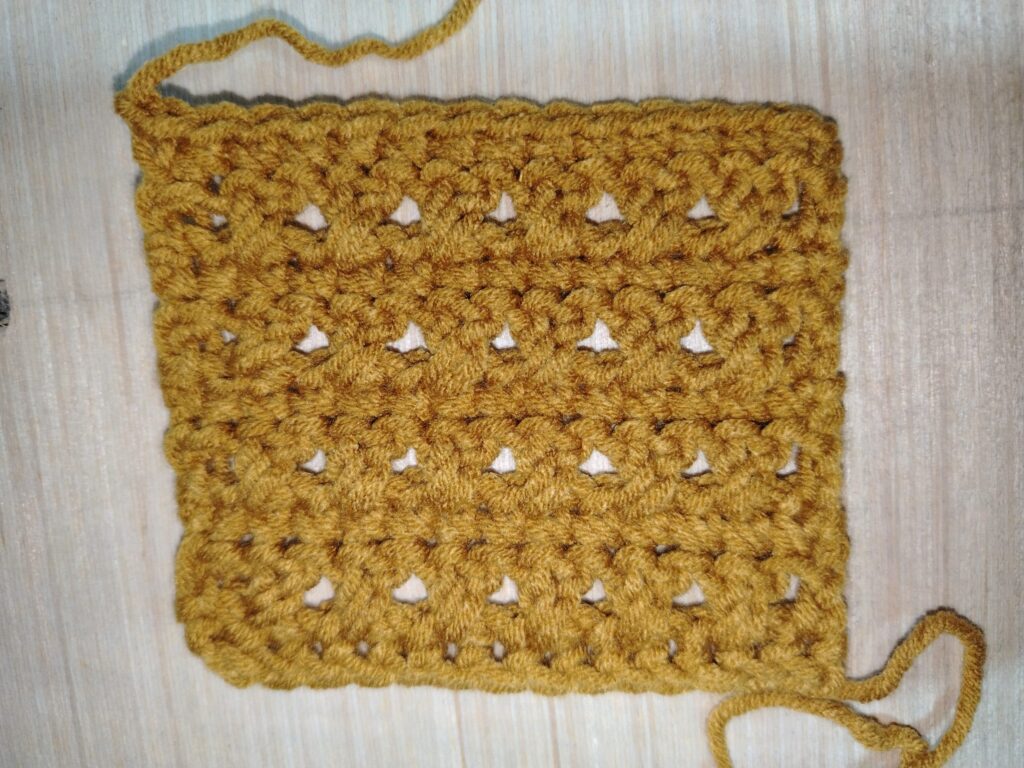
It has a woven appearance and a lovely texture that can look almost like fabric.
I especially love how neat and understated it looks. It doesn’t scream for attention, but once you look closely, you can really appreciate the texture.
This is also a great stitch to experiment with if you enjoy making bags and accessories.
Why I love it
The linen stitch can be used for:
- Crochet bags
- Pouches
- Scarves
- Blankets
- Home decor
- Accessories
It creates a fabric that feels structured without being overly bulky, which makes it a really useful stitch to have in your crochet toolbox.
Swatch: My linen stitch swatch shows that beautiful woven texture created by the stitch pattern.
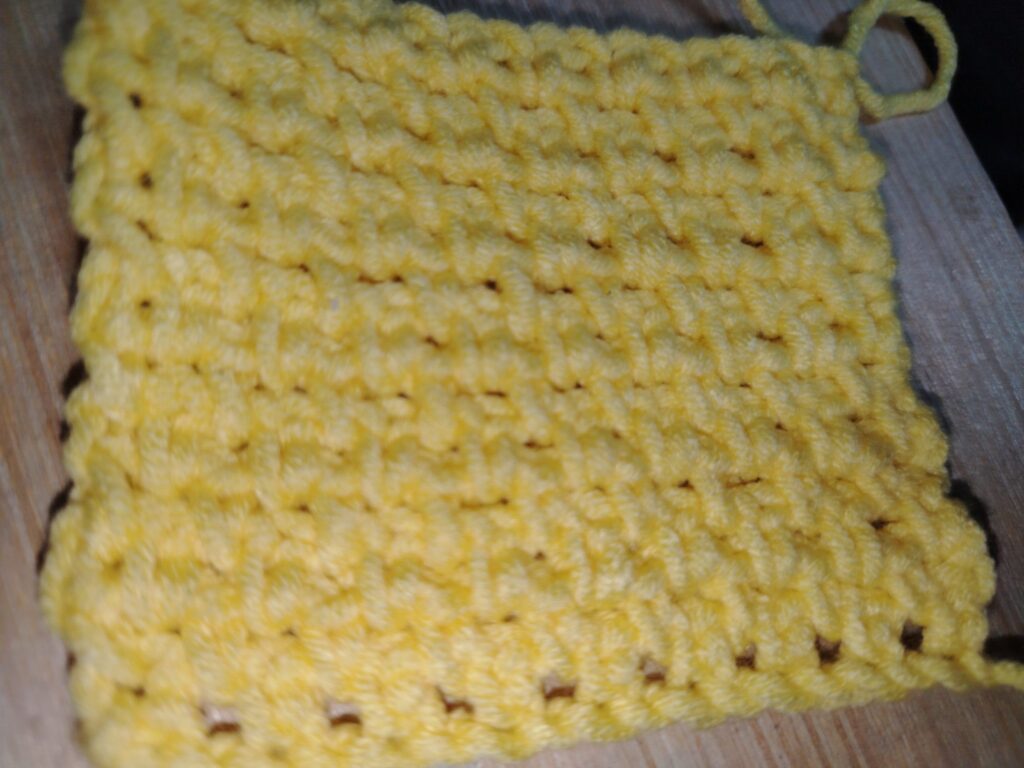
5. Lemon Peel Stitch
The lemon peel stitch is probably one of my favorite stitches on this list because it is simple but has so much texture.
It combines single crochet and double crochet in a repeating pattern, creating a slightly bumpy, textured surface.
And the best part?
It doesn’t require complicated stitch combinations.
Sometimes I think this is exactly the kind of stitch beginners should know because it teaches you that you can create texture without having to learn something incredibly complicated.
Why I love it
The lemon peel stitch is great for:
- Blankets
- Scarves
- Dishcloths
- Bags
- Baby items
- Home decor
It’s also a wonderful way to make a project look more interesting when you don’t want to use a complicated stitch pattern.
Swatch: Here’s my lemon peel stitch swatch so you can see that lovely textured surface.
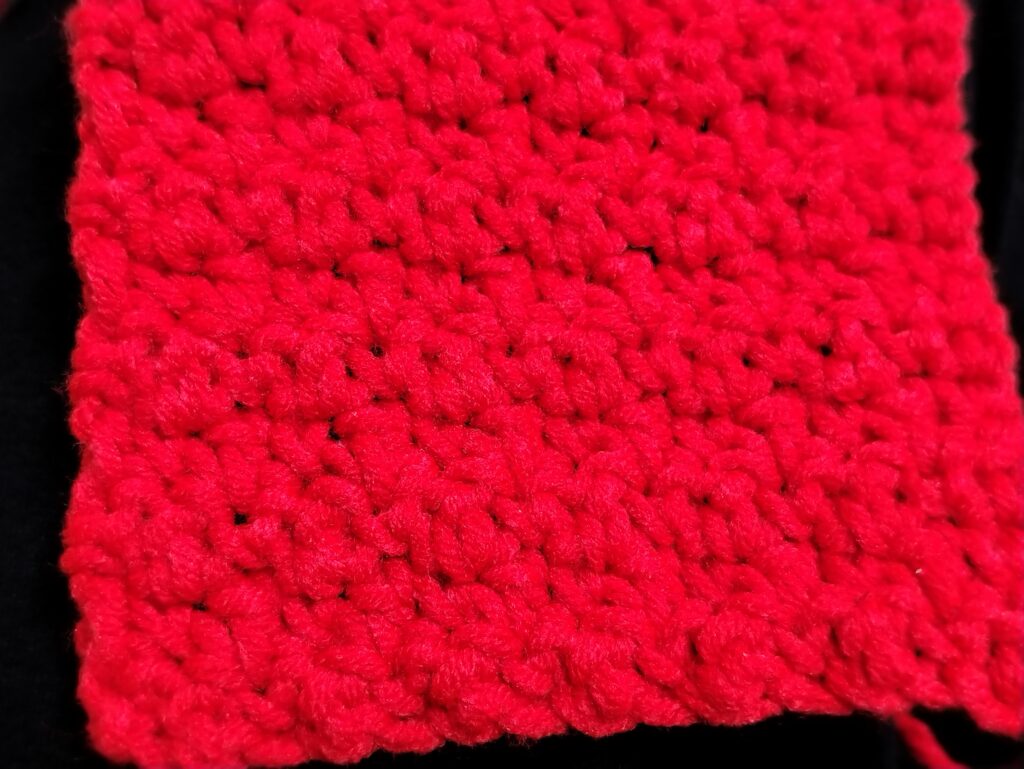
6. Basket Weave Stitch
And finally, we have the basket weave stitch.
This one is definitely a texture lover’s dream.
The basket weave stitch creates a thick, dimensional fabric that resembles the woven appearance of a basket. It uses front post and back post stitches to create those raised sections.
When I first saw this stitch, I thought it looked much more complicated than it actually is.
Once you understand how post stitches work, the pattern starts to make much more sense.
Why I love it
The basket weave stitch is perfect for:
- Blankets
- Pillows
- Scarves
- Winter accessories
- Home decor
- Thick textured projects
It creates such a cozy fabric, which makes it especially nice for projects where you want texture and warmth.
Swatch: My basket weave swatch shows just how much dimension this stitch can create.
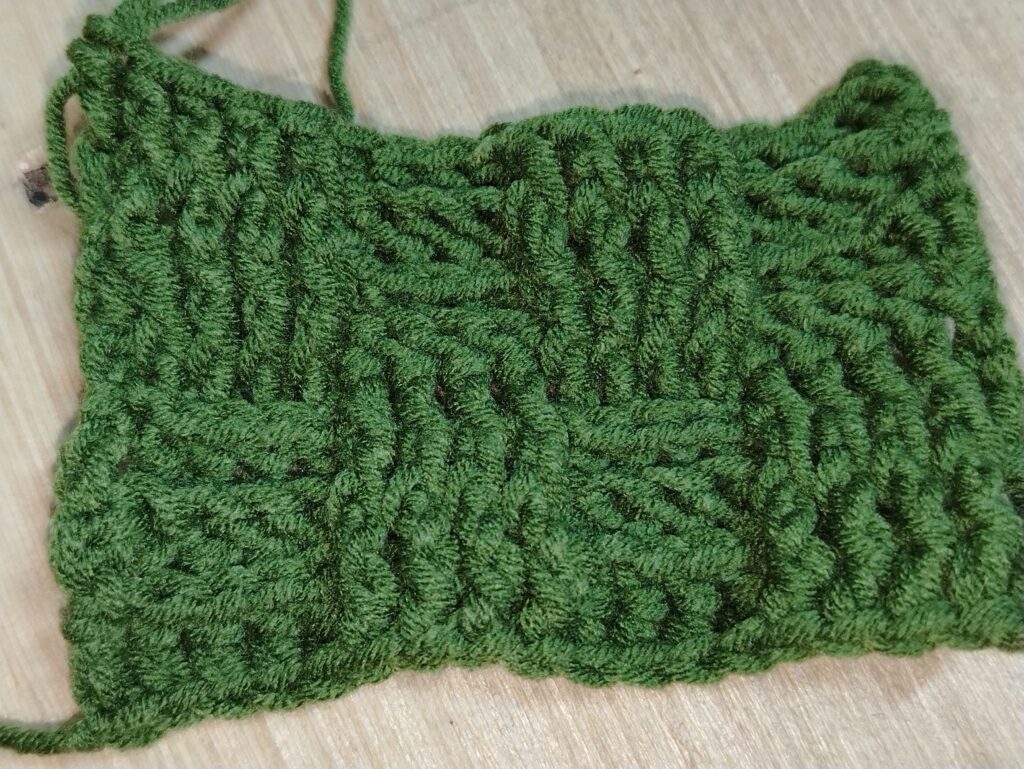
Which Crochet Stitch Should You Learn First?
If you’re a beginner, don’t feel like you have to learn all six at once.
That’s one thing I wish I had understood earlier.
Crochet is much more enjoyable when you give yourself time to actually play with the stitches instead of trying to memorize everything.
Start with one stitch that catches your eye. Make a small swatch. Look at the texture. Try it with a different yarn. Change your hook size and see what happens.
Before you know it, you’ll start recognizing patterns and understanding how different stitches behave.
And that’s when crochet gets really fun.
My Biggest Beginner Crochet Lesson
Looking back, I think I spent too much time thinking that I needed to know more before I could make something beautiful.
But you really don’t.
You can take a few basic stitches and create so many different textures and patterns simply by changing how you combine them.
The ripple stitch, V-stitch, crossed double crochet, linen stitch, lemon peel stitch, and basket weave stitch are just six examples of how much variety there is in crochet.
And if you’re still learning, don’t be afraid to make swatches.
Actually, make lots of them!
Swatching isn’t just about checking your gauge. It’s also a fun way to discover stitches, experiment with yarn, and figure out what you like.
Some stitches will become your favorites.
Others might make you think, “Okay… that’s pretty, but I’m never making that again.” 😂
And that’s completely okay.
That’s how we learn.
Final Thoughts
If I could go back to my beginner crochet days, I would spend more time experimenting with stitches instead of worrying about whether I was doing everything perfectly.
Crochet is a skill that grows with every row, every swatch, and yes, even every mistake.
So grab some yarn, make yourself a few little swatches, and start exploring.
You might just discover your next favorite crochet stitch.
And if you’re looking for more crochet tutorials, handmade inspiration, and stories from my crochet journey, be sure to check out the other posts here on the blog. You can also visit my shop to see what I’ve been making lately. 🧶❤️