
When I first started crocheting, I thought choosing a crochet hook was pretty straightforward.
Find the right size, add it to the cart, and crochet away.
Easy, right?
Wrong. 😂
Nobody actually taught me what made one crochet hook better than another. I didn’t know about different hook shapes, materials, ergonomic handles, or why some hooks felt amazing while others made me question every life decision I had made that day.
So I did what many beginners probably do.
I went online, found a cheap crochet hook set, and thought…
“Why buy one when I can have ALL of them?”
Yep.
I bought the whole set. 😕
And that, my friends, was one of my biggest crochet mistakes.
The hooks looked perfectly fine when they arrived. They had all the sizes I could possibly need, and at the time, I honestly thought I had found myself a bargain.
It wasn’t until I started using them for longer crochet sessions that I discovered their little… personality.
Especially when I used acrylic yarn.
They squeaked.
And not just once in a while.
The longer I crocheted, the more noticeable that annoying little squeak, squeak, squeak became.
😂
If you’ve ever experienced this, you KNOW.
What was supposed to be a relaxing crochet session suddenly sounded like I was rubbing two pieces of plastic together while trying to make a blanket.
And that’s when I started wondering…
Does the crochet hook actually matter that much?
Turns out, yes.
My Crochet Hook Mistake Became a Lesson
Since nobody had really taught me what crochet hooks were best for beginners, I had to learn through trial and error.
Once I started working, I began doing my own research.
I wanted to know what brand and type of hooks I should use for a certain projects, where should I buy or whatnot.
Then, when I received my very first payout from work, I decided to invest in something better.
I bought my first 3.5 mm aluminum crochet hook from Susan Bates.
And here’s the part that still makes me smile.
I’ve had that crochet hook for 12 years.
Twelve!
It’s been through countless projects, countless stitches, probably a few moments of frustration, and A LOT of yarn.
And guess what?
Our eldest uses it now too. 😂
So I guess that little hook has officially become a family heirloom.
And honestly, after 12 years, I think it has earned the title.
That experience completely changed how I look at crochet hooks.
I realized that buying the cheapest crochet hook isn’t necessarily saving money, and buying the most expensive one doesn’t automatically mean you’re getting the best hook either.
It’s about finding the hook that works for you.
So let’s talk about it.
What Actually Makes One Crochet Hook Different From Another?
At first glance, crochet hooks seem ridiculously simple.
There’s a hook.
There’s a handle.
There’s a number stamped somewhere.
What else could there possibly be?
Quite a lot, actually.
Crochet hooks can differ in their material, shape, hook head, throat, shaft, handle, weight, finish, and grip.
And those little differences can completely change how a hook feels while you’re crocheting.
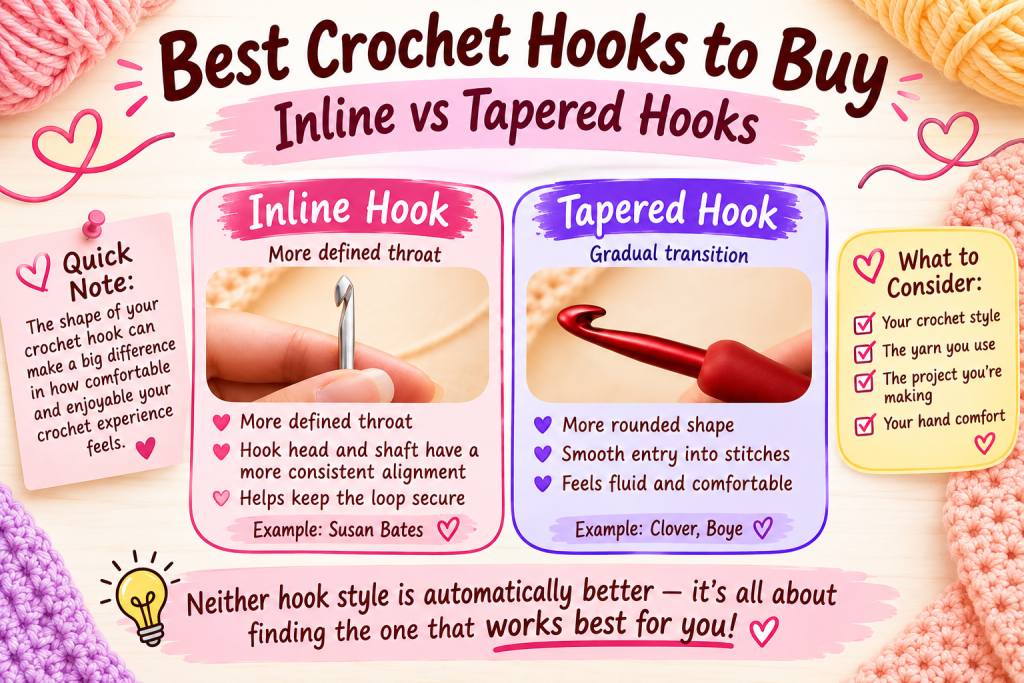
The two hook styles you’ll probably hear about most often are inline and tapered crochet hooks.
Inline vs Tapered Crochet Hooks
Ah, yes.
The crochet hook debate.
Inline or tapered?
It’s one of those topics that can get surprisingly passionate for something that is, technically, just a tiny piece of metal with a hook on one end. 😂
Inline Crochet Hooks
An inline crochet hook generally has a more defined throat, with the hook head and shaft following a more consistent alignment.
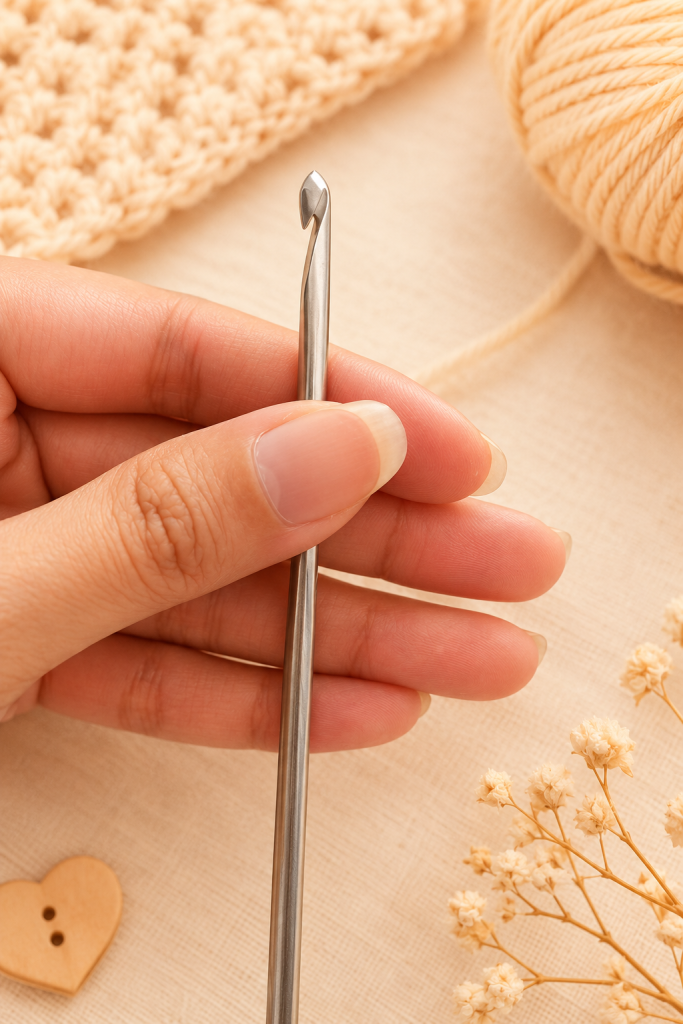
Some crocheters like this style because it can provide a more defined place for the yarn to sit.
Classic Susan Bates hooks are well known for their inline-style design, which is one reason many crocheters have loved them for years.
And apparently, I joined that club without even knowing there was a club.
My 3.5 mm Susan Bates has been with me for 12 years, so clearly we’re doing something right.
Tapered Crochet Hooks
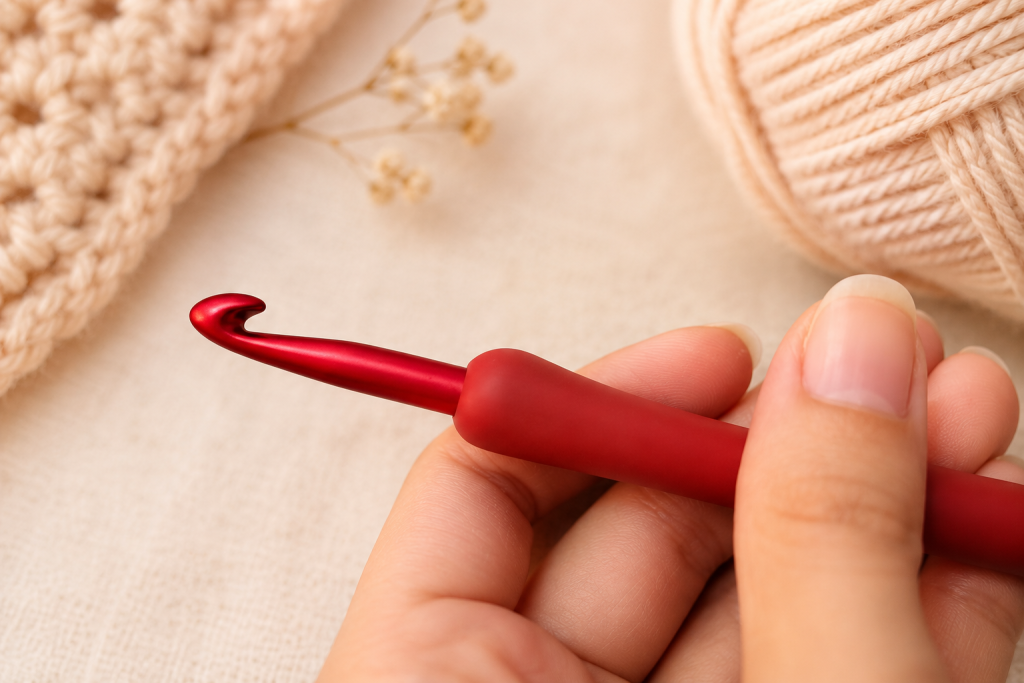
Tapered hooks have a more gradual transition from the hook head into the shaft.
Many crocheters find them smooth and comfortable, particularly when working quickly or with certain yarns.
The important thing is that neither style is automatically better.
Your tension, crochet technique, yarn, project, and personal preference all matter.
You may even find yourself loving an inline hook for one project and a tapered hook for another.
And that’s perfectly fine.
Crochet doesn’t need another rule telling us we’re doing it wrong. 😂
Aluminum Crochet Hooks: Still a Classic for a Reason
If you’ve been crocheting for a while, you’ve probably used an aluminum hook at some point.
And there’s a reason they remain popular.
They’re generally lightweight, durable, smooth, and available in practically every size you could need.
They’re also particularly nice for yarns that glide well across a smooth surface.
My Susan Bates hook is a perfect example.
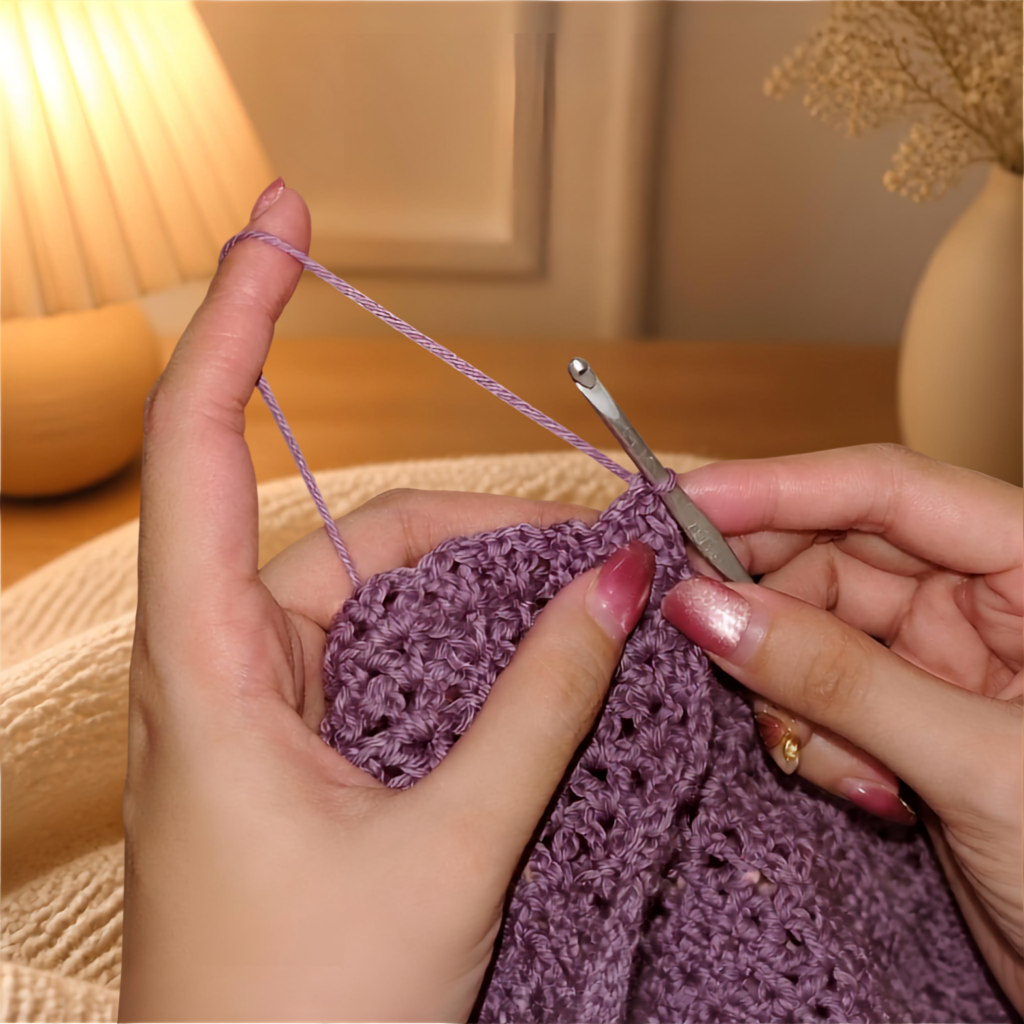
It’s not fancy.
It doesn’t have a giant ergonomic handle.
It isn’t covered in crystals.
It is simply a well-made aluminum crochet hook that has survived 12 years of my crochet adventures.
Sometimes simple really does work.
Plastic Crochet Hooks: Cheap Doesn’t Always Mean Bad
Plastic crochet hooks can be useful, especially for beginners or larger hook sizes.
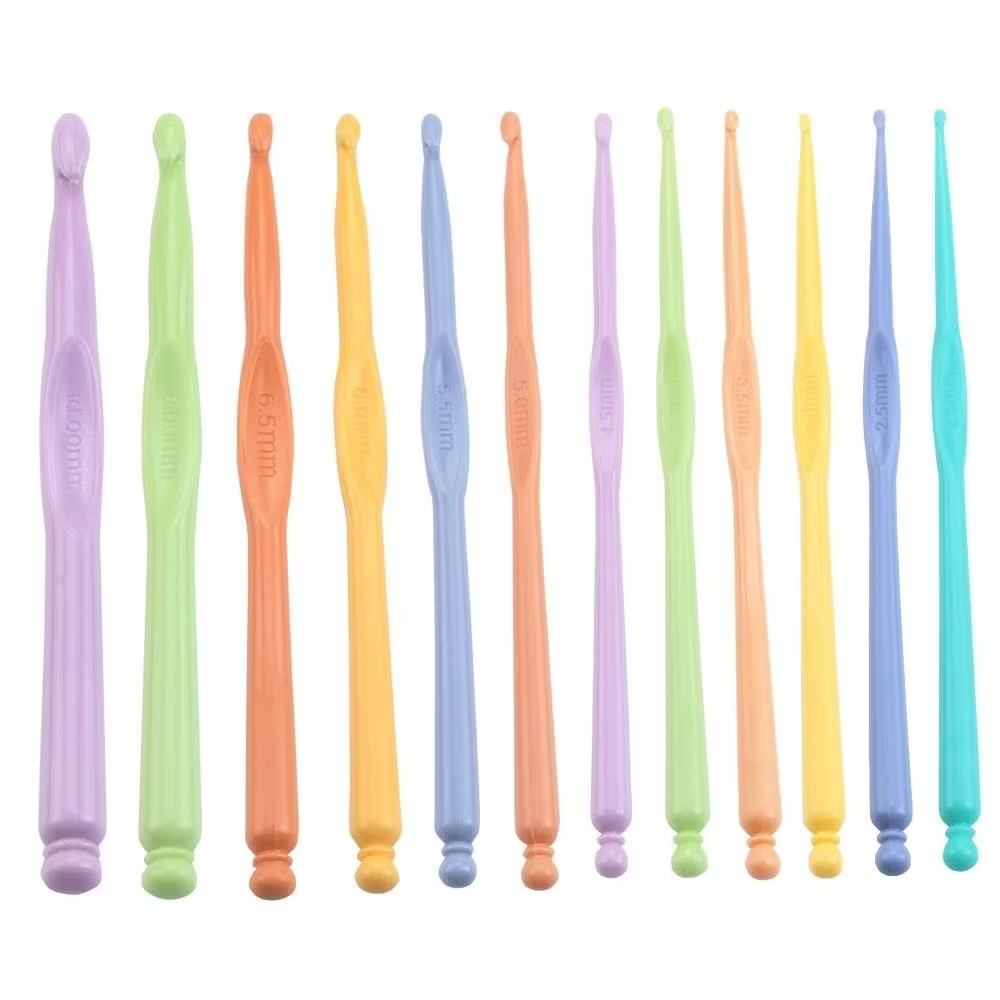
They’re lightweight and generally inexpensive.
But here’s where I would be careful.
Look at the finish.
If there are rough seams, sharp edges, scratches, or anything that catches your yarn, I would put that hook back.
I’ve learned that lesson the hard way.
A cheap crochet hook isn’t automatically terrible.
But a cheap hook that feels rough, catches your yarn, or makes you want to throw it across the room?
No thank you.
My yarn and I have places to be.
Wooden and Bamboo Crochet Hooks
Wooden and bamboo crochet hooks have their own charm.
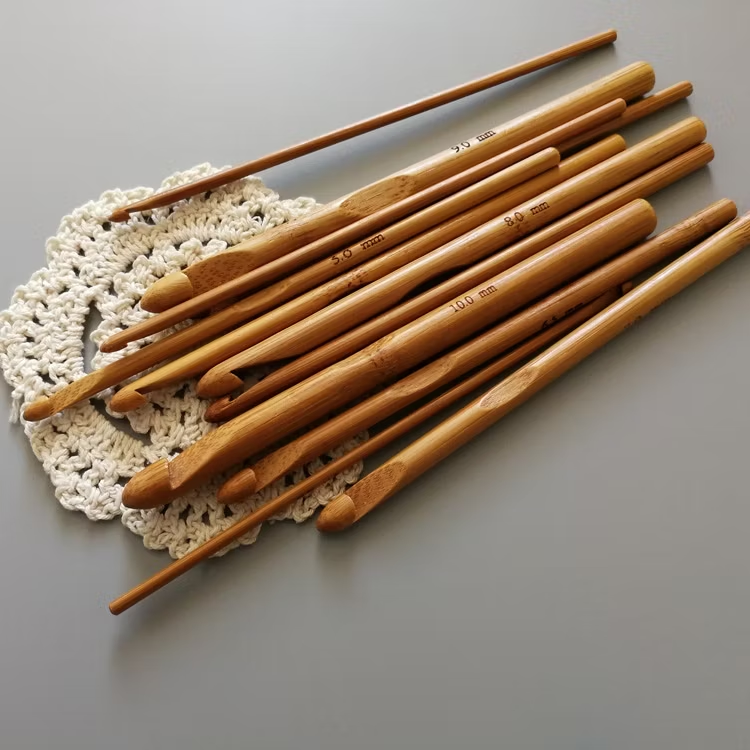
They’re lightweight and can feel warm and comfortable in your hand. Some crocheters also enjoy the slightly grippier surface, particularly when working with slippery yarn.
But again, the finish matters.
A beautifully finished wooden hook can be lovely to use.
A rough one can turn your yarn into a reluctant participant in your crochet project.
And we don’t need that kind of drama.
Ergonomic Crochet Hooks: Are They Worth It?
This is where things get interesting.
Ergonomic crochet hooks usually have a larger or specially shaped handle designed to make gripping more comfortable.
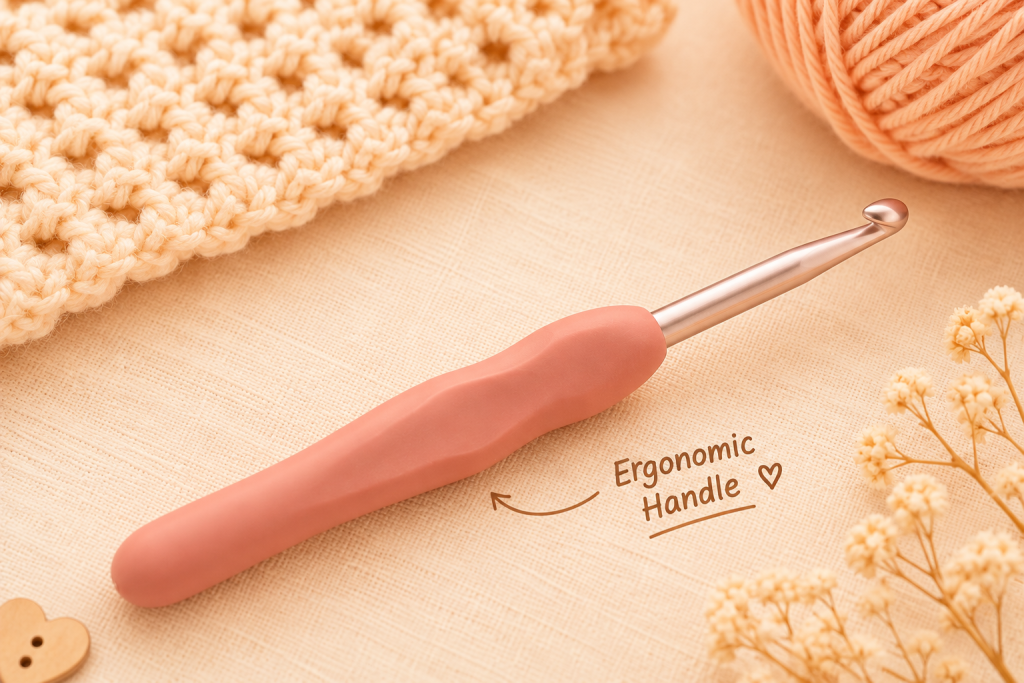
If you crochet for long periods, this can make a noticeable difference.
Especially if you tend to hold your hook tightly.
And let’s be honest.
Some of us don’t hold our crochet hooks.
We grip them for dear life.
😂
You could have the smoothest yarn in the world, but if your hand is cramping because you’re holding your hook like it owes you money, you’re still going to be uncomfortable.
A good ergonomic hook can help make your crochet sessions more relaxed.
Visit Furl’s website to see their own designed ergonomic hooks! 🤩
What Crochet Hook Should You Use for Amigurumi?
Since I love making amigurumi, this is one area where I pay particular attention to my hook.
Amigurumi usually requires relatively tight stitches, so I want a hook that lets me maintain control without constantly fighting with the yarn.
A smooth hook with a comfortable handle can make a huge difference.
And if you’re working with a small hook for hours…
Well.
Your hands will have opinions.
Tiny hook.
Tiny stitches.
Tight tension.
One wrong stitch.
Suddenly you’re staring at your project wondering why you ever thought making a tiny crocheted human was a good idea. 😂
For amigurumi, I would prioritize:
A smooth hook
A comfortable grip
A properly sized hook
A hook that doesn’t split your yarn
Those four things can save you a LOT of frustration.
Recently I have discovered a set of tapered ergonomic hooks that is cheap and beginner friendly but wont make you go bananas after long period of crocheting. I swear it won’t squeak 😂 and it looks like the etimo tulip hook.
I got this from TikTok, I was adamant at first because of course I don’t want to repeat the same mistakes I did when I was just starting but it has good reviews and it costs me only P154.00.
The shop’s name is 👉 Happy Shopping Factory Store
The Crochet Hooks I Would Avoid
I don’t want to tell you that an entire brand or material is automatically bad.
Because here’s the thing about crochet.
What I love might be what you hate.
And what makes my hand happy might make yours miserable.
Instead, I’d pay attention to the qualities of the hook itself.
Avoid Rough Hooks
If your hook catches the yarn, scratches your fingers, or feels rough when you’re crocheting, that’s a red flag.
Your hook should help your yarn move, not fight it.
Avoid Hooks That Make Your Hand Uncomfortable
If your hand starts hurting quickly, try another shape or grip.
Sometimes we assume we’re holding our hook incorrectly when the real problem is simply that the hook isn’t comfortable for us.
Avoid Hooks That Squeak
I’m putting this one here because of my own experience.
That horrible squeak from my cheap hooks was especially noticeable when I used acrylic yarn.
If your crochet session sounds like a tiny door desperately needing WD-40…
Maybe it’s time to break up with that hook. 😂
Avoid Buying a Huge Set Before You Know What You Like
This is probably the biggest lesson I wish someone had told beginner me.
Don’t buy the whole set immediately.
I did.
I regretted it.
Save yourself.
Try one hook first.
If you love it, then slowly build your collection.
There’s no rule saying you need every size sitting in a giant case before you’ve even finished your first granny square.
What About High End Crochet Hook Brands?
Now we’re getting to the dangerous part.
The pretty hooks.
The fancy hooks.
The ones that somehow make you believe your crochet project will become more sophisticated simply because the hook is prettier. 😂
There are several premium crochet hook brands that are popular among experienced crocheters, and some are genuinely worth considering.
But remember:
You don’t need an expensive crochet hook to make beautiful crochet.
A premium hook should be considered an upgrade for comfort, feel, design, or personal preference, not a requirement for being a “serious” crocheter.
Clover Amour
Clover Amour hooks are probably one of the easiest ergonomic upgrades to recommend.
They have colorful ergonomic handles and smooth aluminum hook heads.
They’re comfortable, practical, and widely loved by crocheters.
If you’re coming from basic metal hooks and want something more comfortable without going completely into luxury-hook territory, these are a great place to look.
My take: A very good everyday ergonomic option.
Tulip Etimo
Tulip Etimo hooks are another premium favorite.
They’re known for their smooth hook finish and comfortable ergonomic handles.
If you crochet frequently and spend long stretches of time working on projects, this type of hook can feel like a little upgrade for your hands.
My take: Definitely worth considering if comfort is high on your list.
Furls Crochet
And then there’s Furls.
Furls hooks are gorgeous.
Let’s just get that out of the way.
They have distinctive ergonomic designs and definitely fall into the category of crochet accessories that can make you say:
“I don’t need this… but LOOK at it.”
😂
They’re more expensive than basic hooks, so I wouldn’t recommend buying a complete set without trying one first.
If the shape works for your hand, though, they can be a lovely treat.
My take: A splurge-worthy option for crocheters who love beautiful tools and ergonomic designs.
Addi
Addi makes premium crochet hooks with a sleek, more traditional feel.
If you prefer something closer to a classic metal hook rather than a large ergonomic handle, Addi is worth exploring.
My take: A nice choice if you prefer traditional hook designs with a premium feel.
So, Which Crochet Hook Is Actually Best?
Here’s where I’m going to disappoint anyone hoping for a dramatic winner.
There isn’t one.
The best crochet hook is the one that works well with your hand, your yarn, your tension, and your project.
That’s it.
You don’t need the most expensive hook.
You don’t need the hook everyone on social media is using.
And you definitely don’t need to feel like you’re doing crochet wrong because your favorite hook costs less than a fancy coffee.
Try different styles.
Try different materials.
Try different handles.
And pay attention to how your hands feel.
That’s how you find your favorite.
What I Recommend If You’re a Beginner
If you’re just starting your crochet journey, I would keep things simple.
Get a few good quality hooks in sizes that match the yarn and projects you’re interested in.
A 3.5 mm or 4 mm crochet hook can be a useful starting point for many yarns and projects, but always follow the pattern’s recommended hook size and remember that your personal tension matters too.
Most importantly, don’t buy an enormous set just because it looks like a bargain.
Buy one.
Try it.
Crochet with it.
See how it feels after an hour.
See how it feels after several hours.
Notice how the yarn moves.
Notice whether your hand gets tired.
Then decide whether you want more.
That’s what I wish I had done.
Do You Really Need High End Crochet Hooks?
Honestly?
No.
You can make beautiful crochet with affordable hooks.
Your creativity does not magically increase because your crochet hook costs more.
A fancy hook won’t teach you how to count stitches.
It won’t stop you from accidentally skipping a stitch.
And it certainly won’t stop you from frogging three hours of work because you suddenly realize you’ve been crocheting into the wrong stitch.
Believe me. 😂
But…
A good crochet hook can make crocheting more enjoyable.
If you crochet frequently, comfort matters.
If you spend hours making amigurumi, comfort matters.
If you’re working with difficult yarn, the smoothness and shape of your hook matter.
If you simply enjoy beautiful crochet tools, that matters too.
You don’t have to justify enjoying your tools.
Sometimes a pretty crochet hook just makes you happy.
And that’s reason enough.
My Biggest Crochet Hook Lesson
Looking back, I’m actually glad I bought those cheap hooks.
Not because they were good.
They weren’t.
But because they taught me what I didn’t want.
They made me pay attention.
They pushed me to research crochet hooks instead of blindly buying whatever looked like a bargain.
And eventually, that research led me to my trusty 3.5 mm Susan Bates aluminum hook.
Twelve years later, it’s still here.
And now our eldest uses it.
That little hook has crocheted through more projects than I can probably remember.
It has been held by two generations of our family.
And honestly?
I think that’s a better review than anything I could write.
Final Thoughts
If you’re a beginner and you’re currently staring at a giant collection of crochet hooks wondering which one you should buy, take a breath.
You don’t need everything.
You don’t need the most expensive set.
You don’t need the hook that everyone else says is the best.
Start with a good-quality hook.
Try it.
Pay attention to how it feels.
And don’t be afraid to experiment.
Because finding the right crochet hook is a little bit like finding the right pair of shoes.
It might look perfect on someone else.
But if it hurts your feet, you’re not going to enjoy walking in it.
Same thing with crochet.
The perfect hook is the one that lets you sit down, pick up your yarn, and lose yourself in your project without constantly thinking about your hand, your hook, or that annoying squeak.
And if you find one that lasts 12 years and gets passed down to your eldest?
Well…
Keep that hook.
That little thing is family now. 😂❤️🧶
What About You?
Now I want to hear from you.
Did you make a crochet hook mistake when you first started?
Did you buy one of those giant cheap sets like I did?
Or did you somehow know exactly what you were doing while the rest of us were out here collecting squeaky hooks? 😂
And most importantly…
What’s the one crochet hook you can’t live without?
Tell me in the comments. I would genuinely love to know which hook has earned a permanent spot in your crochet bag.